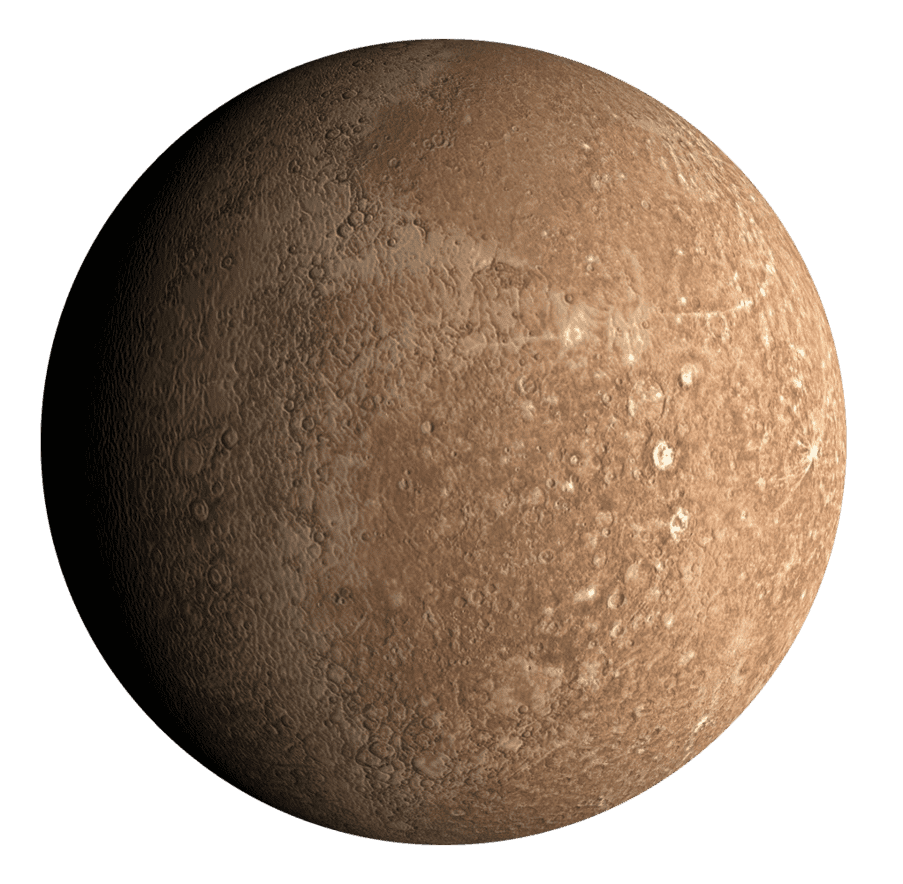
Mercury
From the surface of Mercury, the Sun would appear more than three times as large as it does when viewed from Earth, and the sunlight would be as much as 11 times brighter.
10 Need-to-Know Things About Mercury
-
SMALL WORLD
Mercury is the smallest planet in our solar system – only slightly larger than Earth's Moon.
-
INSIDE TRACK
Mercury is the planet that orbits the closest to the Sun.
-
FASTEST PLANET
Mercury is the fastest planet in our solar system – traveling through space at nearly 29 miles (47 kilometers) per second. The closer a planet is to the Sun, the faster it travels. Since Mercury is the fastest planet and has the shortest distance to travel around the Sun, it has the shortest year of all the planets in our solar system – 88 days.
-
ROUGH SURFACE
Mercury is a rocky planet, also known as a terrestrial planet. Mercury has a solid, cratered surface, much like the Earth's moon.
-
CAN'T BREATHE THERE
Mercury's thin atmosphere, or exosphere, is composed mostly of oxygen (O2), sodium (Na), hydrogen (H2), helium (He), and potassium (K).
-
MOONLESS
Mercury has no moons.
-
RINGLESS
There are no rings around Mercury.
-
TOUGH PLACE FOR LIFE
It is unlikely that life as we know it could survive on Mercury due to solar radiation, and extreme temperatures.
-
BIG SUN
Standing on Mercury's surface at its closest approach to the Sun, our star would appear more than three times larger than it does on Earth.
-
ROBOTIC VISITORS
Two NASA missions have explored Mercury: Mariner 10 was the first to fly by Mercury, and MESSENGER was the first to orbit. ESA's BepiColombo is on its way to Mercury.
Exploration
Because Mercury is so close to the Sun, it is hard to directly observe from Earth except during dawn or twilight when the Sun's brightness doesn't outshine little Mercury. However, 13 times each century, observers on Earth can watch Mercury pass across the face of the Sun, an event called a transit. These rare transits fall within several days of May 8 and November 10. Previous transits occurred May 7, 2003, Nov. 8, 2006, and May 9, 2016, and Nov. 11, 2019.
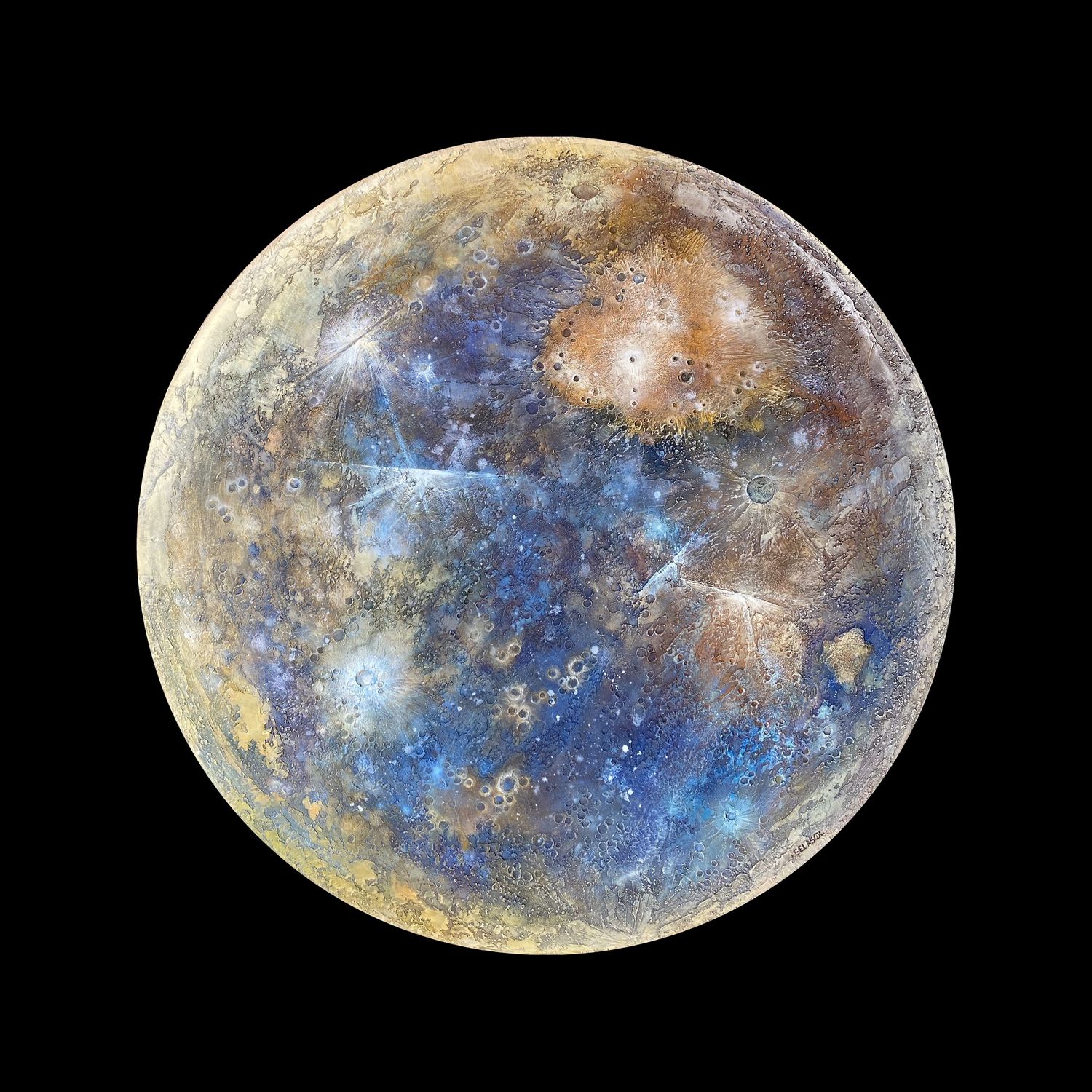
The European Space Agency and JAXA launched a joint mission to Mercury in 2018. The mission, called BepiColombo, is made up of two spacecraft. ESA built the main spacecraft, the Mercury Planetary Orbiter, and JAXA supplied the Mercury Magnetospheric Orbiter.
BepiColombo captured its first views of Mercury during a flyby on Oct. 1, 2021. A total of nine flybys are planned to help steer the spacecraft into orbit in late 2025. It will begin its primary science mission in early 2026.
Twenty-four humans have traveled from the Earth to the Moon. Twelve walked on its surface. The last human visited the lunar surface in 1972.